
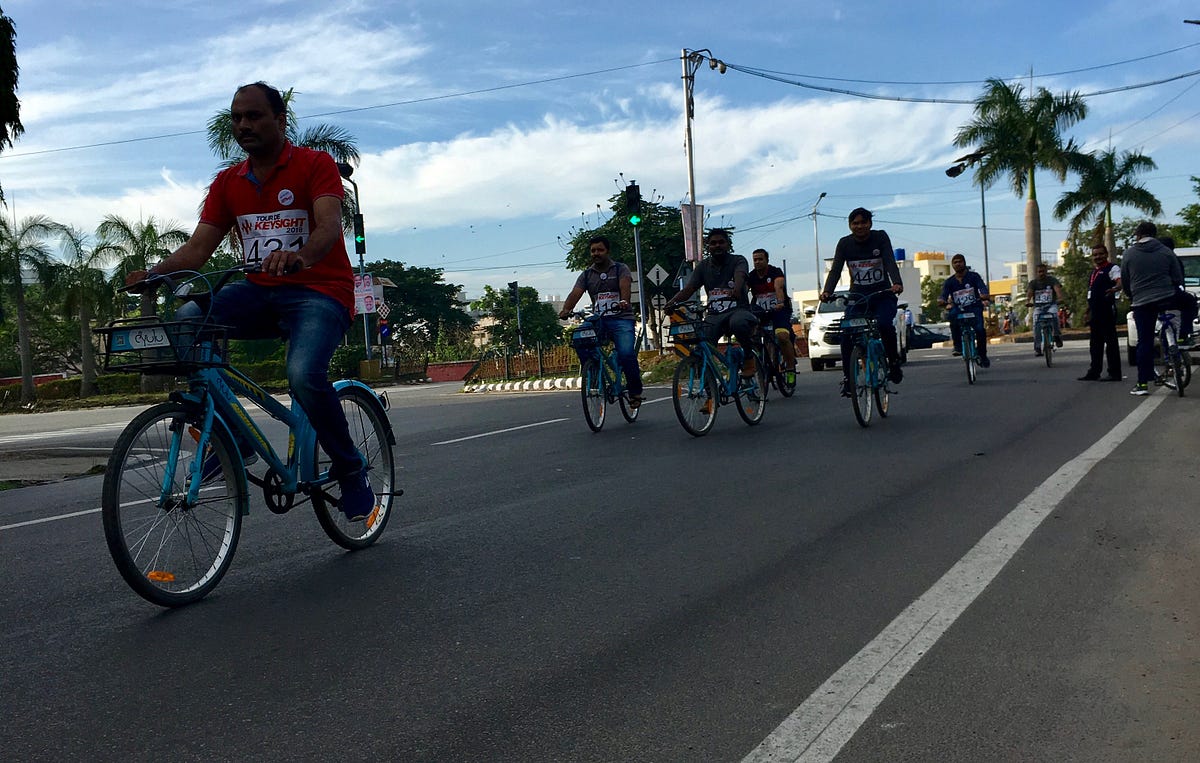
As we head into another car-free day on 22nd September 2018, we need to remember the origins of the movement in de Pijp in the Netherlands. This video documents the hard-fought victory.
The Netherlands has come a long way becoming the mecca of Cycling and showing the way to many countries across the globe. The situation in India has been quite the reverse. Since the liberalisation and the boom decade thereafter, cycling has been relegated to an inferior good. With an ever-increasing motor vehicle population and an increasing dependency on imports for fuel, renewables and non-motorised methods are gaining mind share if not mode share.
Safety is cited as the most important reason for not taking up cycling in the city. Those who have been riding for a long time, including yours truly, will vouch for the fact that cycling is not any less safe than a two-wheeler. In fact, some argue motorised two-wheelers can be more dangerous. For every mile travelled, various studies have put the risk of fatalities on a motorbike to be 30 to 35 times greater than a motor car. Yet Bengaluru has 500% more two-wheelers than cars. Highest ever two-wheeler sales in India was clocked in 2018, where 2 crores two-wheelers were sold in one year. People don't think twice before buying a two-wheeler or putting their hands on one. Not a single person who steps up to buy a motorised two-wheeler questions its safety, the decision is plainly power and mileage. Many of the same two-wheeler drivers tend to look at a cycle as being more prone to accidents. Something in the motorised two-wheeler makes them feel safe. If its the powerful engine and the metal around it, then is counter-intuitive. It's the engine and the metal that makes it more dangerous. Demonstrating Peltzman effect, Kolkata police validated recently in a study what many knew all along, top two reasons for motorised two-wheeler crashes have been speeding and rash driving.
The gap between the normative expectation and the empirical expectation on cycling is large. This is a classic collective action problem. Policies and the laws will signal the right intent but it needs a large number of people to narrow the gap in the expectation and reality before the laws can be effective. Narrowing the gap is in the hands of the people. With each person that rides, it sends a signal to the others that he or she has company. The more cycles there are, the more the demand for industry & infrastructure. Cycle Day has been setting the mood for the past five years by catalysing behavioural change. The Public Bicycle Sharing systems and piecemeal infrastructure provisioning are taking baby steps to enable the spread of this mode. The #CycleToWork campaign should take social change to the next level.